Exercise Guide
A Clinical Approach to Adductor Toning and Gluteal Hypertrophy
Achieving a sculpted, athletic lower body profile requires a strategic emphasis on muscular re-composition rather than mere caloric expenditure. The aesthetics of “slim thighs” and “lifted hips” are biologically determined by the tone of the Adductor group (inner thighs) and the Gluteal Complex (maximus, medius, and minimus). When these muscles are underactive, the overlying tissue appears lax, contributing to a “jiggle” effect.
This professional-grade routine leverages lateral and diagonal movement patterns—planes of motion frequently neglected in standard forward-back exercises like walking or running. By targeting these specific vectors, we optimize hip stability, reduce joint inflammation, and create a firm, contoured silhouette that defines the hip-to-knee transition.
1. The Lateral Plié Hip Opener
This movement is a variation of the sumo squat, specifically engineered to maximize mechanical tension on the inner thigh wall while facilitating hip joint lubrication.
Technical Execution:
- Stance: Adopt a wide-base stance (1.5x shoulder width) with 45-degree external hip rotation (toes out).
- The Descent: Inhale as you hinge at the hips, maintaining an upright thoracic spine. Ensure knees track directly over the second toe to avoid valgus stress.
- The Drive: Exhale and drive through the heels. At the apex, perform a conscious pelvic floor contraction and squeeze the adductors.
Specialist Tip: Avoid “locking” the knees at the top to maintain constant tension on the muscle fibers.
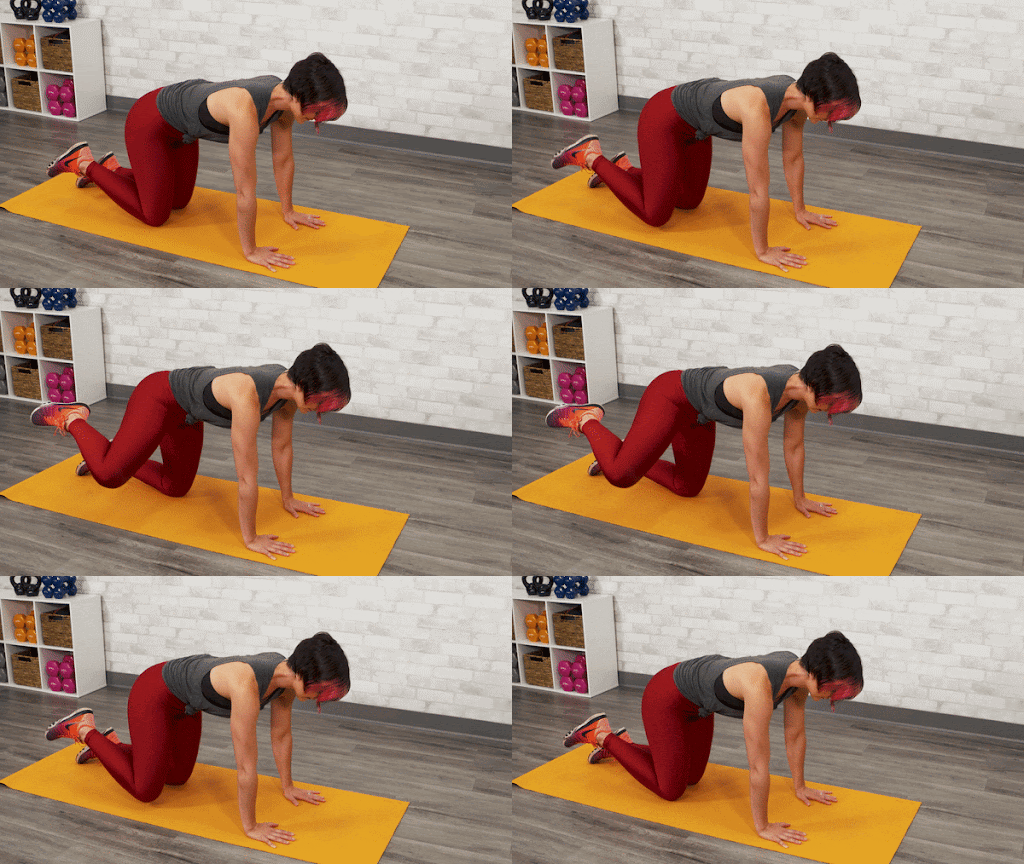
2. Controlled Side-Lying Abduction
This isolation movement is a staple in physical therapy for corrective hip alignment and in bodybuilding for the “side-glute” curve.
:max_bytes(150000):strip_icc()/104--Hip-AbductionGIF-0f7b74d948f849d78864da9605a3eaa8.gif)
Technical Execution:
- Setup: Lie laterally on a firm surface. Stack the pelvis vertically; avoid posterior or anterior tilting.
- The Lift: With the foot dorsiflexed (toes toward shin), elevate the superior leg 30–45 degrees.
- The Control: Lower the leg over a 3-second eccentric count, stopping just before contact with the inferior leg.
| Muscle Group | Aesthetic Contribution | Functional Benefit |
|---|---|---|
| Adductor Group | Eliminates inner thigh laxity. | Protects the knee joint from inward collapse. |
| Gluteus Medius | Creates the “rounded” lateral hip profile. | Stabilizes the pelvis during walking. |
| Gluteus Maximus | Provides vertical lift and posterior volume. | Primary driver for metabolism and power. |
3. High-Displacement Side Lunges
Lateral lunges introduce a significant eccentric stretch to the inner thigh, which is a potent trigger for muscle firming and fat oxidation in the surrounding tissue.

Technical Execution:
- Step wide to one side, keeping the trailing leg completely locked and straight.
- Sit your weight back into the heel of the loading leg, maintaining a proud chest.
- Explode back to the starting position using the adductors to pull the leg inward.
4. The Curtsy Lunge (Diagonal Loading)
Diagonal patterns engage the glutes from an angle that traditional squats cannot reach, specifically targeting the “tie-in” between the glutes and the hamstrings.
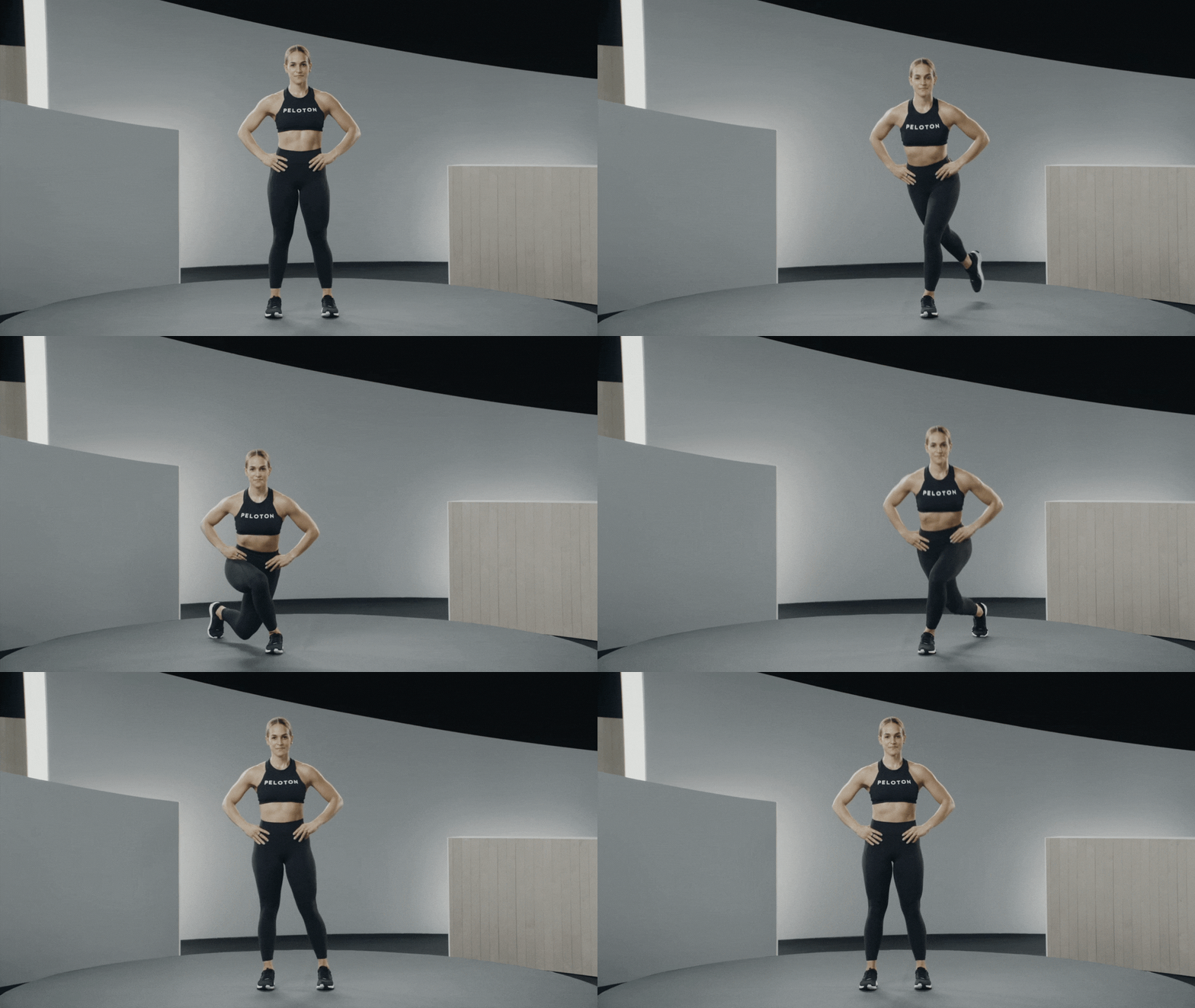
Technical Execution:
- Step one leg back and across the midline. Keep the front foot planted firmly.
- Lower the rear knee toward the floor, maintaining a square pelvis.
- Focus on the stretch-shortening cycle of the glute medius as you push back to neutral.
5. Posterior Chain Bridge (Isolated Extension)
The Glute Bridge is the most effective movement for isolating the Maximus without the spinal loading associated with heavy squats.

Technical Execution:
- Supine position, knees flexed at 90 degrees.
- Execute a Posterior Pelvic Tilt to engage the core before lifting.
- Drive the hips vertically. Hold a maximal contraction at the apex for 3 seconds.
6. The Frog Pump (High-Intensity Finisher)
By placing the feet in a “sole-to-sole” position, we mechanically disadvantage the hamstrings, forcing the glutes and inner thighs to work in isolation.

Technical Execution:
- Lie on your back, soles of the feet together, knees flared wide.
- Tuck the chin to the chest to ensure a flat lumbar spine.
- Perform rapid, controlled hip pulses toward the ceiling, maintaining the flare in the knees.
Expert Recovery & Nutrition Protocol
To maximize the “sculpting” effect of these 6 movements, one must address the extracellular matrix of the skin and muscle. High-quality protein intake (1.6g per kg of body weight) is essential for muscle repair, while hydration supports the fascia’s elasticity, reducing the appearance of cellulite.
Commitment: Perform this routine 3–5 times per week. Focus on the mind-muscle connection during every repetition. Consistency in form will yield more significant results than intensity alone.
Step forward. Stand tall. Re-define your strength.